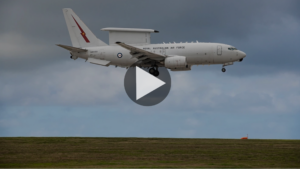
How Congress is trying to fund the E-7 Wedgetail program
The Wedgetail would replace the aging E3 Sentry for airborne early warning and control.
The Wedgetail would replace the aging E3 Sentry for airborne early warning and control.

From the Iran supplemental to the debate over a third reconciliation bill, Congress will have its hands full with a long list of defense funding needs when it returns from recess in September.


A decorated combat aviator and biotech CEO advocates preparing for novel viral threats before the next crisis.

The bill also restores funding for the E-7 Wedgetail after Defense Department leaders signaled their intent to continue the program.

An Air Force spokesperson told Breaking Defense following the hearing that there are seven E-11s in the current fleet, and confirmed that the plan is to replace them with the emerging DAF (Department of the Air Force) Battle Network.

Secretary of Defense Pete Hegseth said the US had "maxed out" its defensive posture, but Iran managed to strike US aircraft in Saudi Arabia anyway.

Despite the UK once committing to field Wedgetail in the “early” 2020s, it was revealed last year that a new timeframe of 2026 had been approved.


Avoiding vendor lock and providing more room for sensors and upgrades are critical considerations.

Gen. Chance Saltzman, Space Force chief, said the work already done to design a satellite system for tracking ground targets should also help speed AMTI capabilities to orbit.

The military space sector is evolving fast. Get the latest from Space Force and industry officials on what’s next for acquisition, policy and training in a new Breaking Defense eBook.
"So the focus is going to be on delivering AMTI [airborne moving target indication] capability very quickly," Air Force Secretary Troy Meink said.

The government shut down Oct. 1 after Congress failed to pass an FY26 budget.


Architecture that linked sensors, C2, RF effects, and lasers into a distributed c-UAS kill chain.

The continuing resolution does not include $3.9 billion requested by the White House for the Columbia-class submarine, but gives funding flexibility to other key programs.
"I would say that we are at the point now where the technology has matured and it's commoditized, so that radar based AMTI from space is feasible," outgoing SDA Director Derek Tournear told Breaking Defense in an exclusive interview.
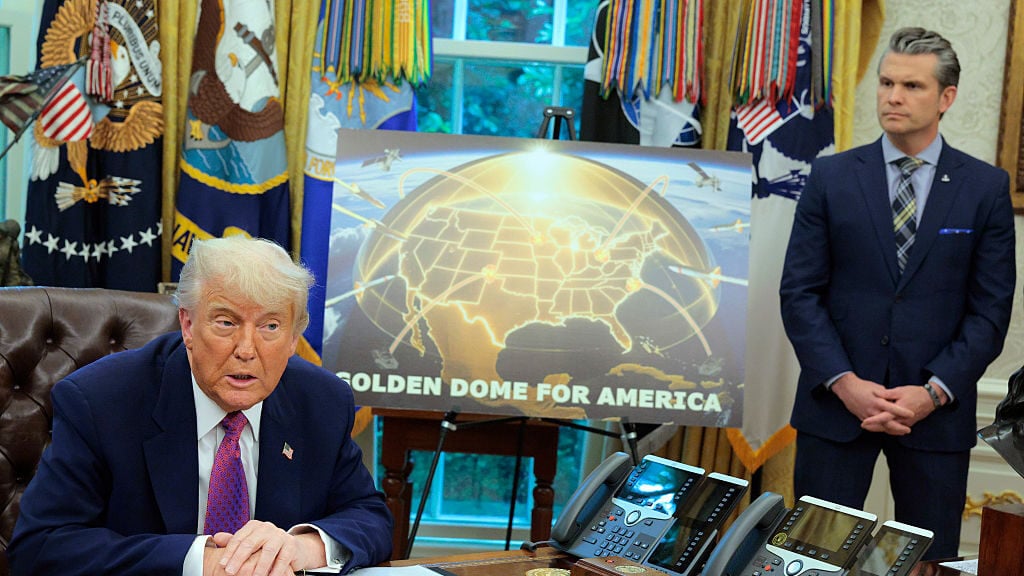
As Congress returns from August recess, Breaking Defense examined how each defense committee is looking at a dozen major programs, from Golden Dome to F/A-XX to the cancellation of the E-7 Wedgetail.

Lt. Gen. DeAnna Burt, the Space Force’s deputy chief of space operations for operations, cyber and nuclear, also said the service expects to complete an analysis of alternatives by this fall for a separate but related effort to track airborne targets from the heavens.